One conversation can prevent the next injury or fatality.
On July 30, National Whistleblower Day, we recognize the workers who raise concerns about unsafe working conditions, health hazards, fraud, and other violations. Their courage not only protects their own rights but also helps keep their co-workers safe.
At the Occupational Safety and Health Administration, protecting workers who report concerns without retaliation is a critical part of our mission. When workers feel safe to report hazards, employers have the opportunity to address problems before someone gets hurt. That’s why OSHA’s Whistleblower Protection Program plays such an important role in strengthening workplace safety across the country.
Take the case of a commercial truck driver in Texas. After reporting safety concerns, the worker was terminated in violation of the Surface Transportation Assistance Act, which protects employees who raise commercial motor vehicle safety concerns. Following an investigation, we ordered the company to reinstate the employee and pay more than $100,000 in back wages, interest, compensatory damages, and punitive damages. Cases like this send a clear message: workers have the right to speak up about safety, and retaliation has consequences.
The impact of our Whistleblower Protection Program extends far beyond individual cases. Every interaction is an opportunity to leave someone better informed about their rights, support an employer with their anti-relation program, and a workplace that’s safer for everyone.
In FY 2025 alone, we:
screened 15,256 complaints
conducted 3,245 investigations of complaints that met requirements for investigation
helped recover $45 million for America’s workers, achieved 732 positive outcomes, and reinstated 35 workers who had been unlawfully retaliated against
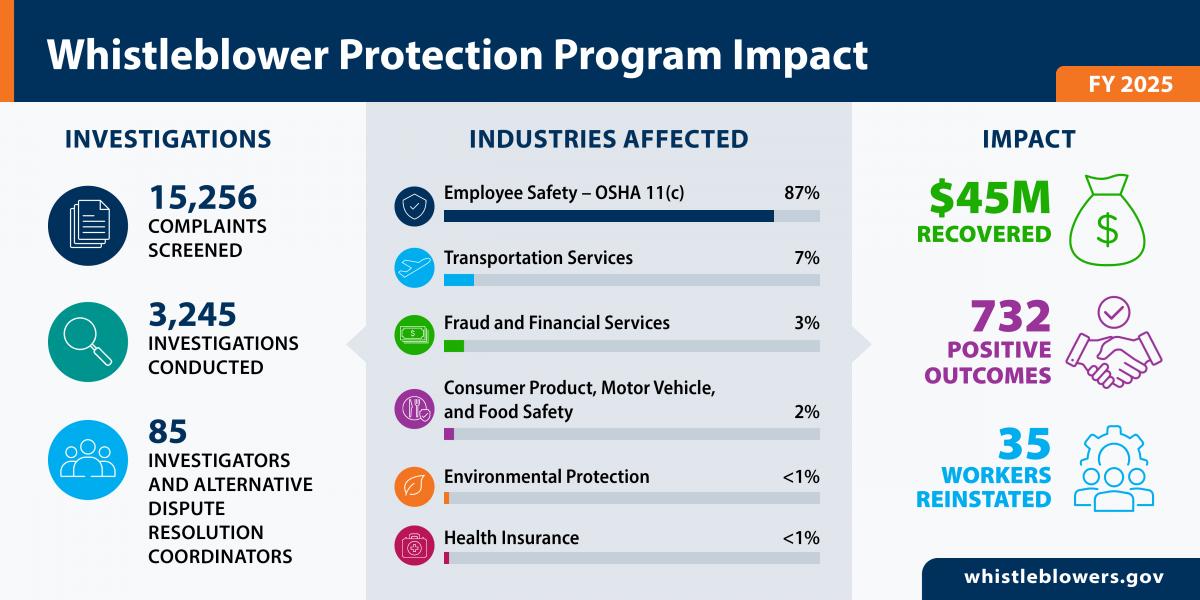
These numbers represent more than statistics. They represent workers who kept their jobs, recovered lost wages, and helped make workplaces safer for everyone.
Retaliation can take many forms, including termination, demotion, reduced hours, intimidation or other actions meant to discourage workers from exercising their rights. These actions not only violate the law but can also create a culture where hazards go unreported, increasing the risk of serious injuries and fatalities.
We all play an important role in preventing retaliation by fostering a workplace where workers feel comfortable reporting concerns and where issues are addressed. Open communication builds trust, strengthens safety and health programs, and benefits everyone.
This National Whistleblower Day, we thank the workers who have the courage to speak up. Their voices help OSHA fulfill its mission of ensuring safe and healthy working conditions for America’s workers. When workers can share concerns without fear, everyone returns home safe at the end of the day.
Learn more about our Whistleblower Protection Program online, including how to file a complaint, or contact OSHA at 1-800-321-OSHA (6742) with workplace safety or health concerns.
Jennifer Rous is the director of OSHA’s Whistleblower Protections Program.