


For students with disabilities pursuing careers in public service, the Federal Government offers a wealth of rewarding job opportunities. Elijah Henderson learned this firsthand through his participation with the Workforce Recruitment Program (WRP), which helped him obtain two government agency jobs.
Elijah, who is Deaf and uses cochlear implants, earned his B.A. in communications studies in 2022 from Gallaudet University, where he is now working toward his master’s in public administration. After learning about the WRP from a friend who participated in the program, Elijah worked with Gallaudet’s WRP coordinator to take advantage of it himself. He submitted his application, took part in an informational interview, and was soon fielding inquiries from several federal agencies.
The first job Elijah secured through the WRP was as a program support specialist with the U.S. Department of Health and Human Services in Washington, D.C., where he performed administrative and data entry tasks. He later accepted a position as an administrative support specialist with the U.S. Department of Labor, where Elijah continues to work today. In his role, he handles a variety of tasks in support of the Department and its workforce, including those related to Section 508 compliance, information technology onboarding, and safety and health programs.
Elijah’s long-term goals are to learn as much as he can and to grow as both a professional and leader. He says he wants to become a manager one day so that he can support and inspire other people with disabilities to aim high. “Working with the WRP has taught me to seek out and utilize resources that might be available to me,” says Elijah. “It also has taught me that the sky’s the limit—you can aim as high as you want to go, and there is nothing wrong with seeking assistance to get there.”
In addition to being Deaf, Elijah is a person of color. He says these intersectional aspects of his identity motivate him, especially knowing that many other disabled people of color may not have access to the same opportunities. “This pushes me to make the best out of the opportunities I receive and to strive to be better every day,” he says.
His advice for other students considering the WRP? Find ways to make your resume stand out by working on campus, volunteering and seeking certifications. Also, make professional connections that you can use as references and job leads. “Programs like the WRP are designed to help students with disabilities but remember to put in the work to get everything out of it that you can,” says Elijah.
When your sights are set on a technology career, there’s nothing like a hands-on internship to level up your portfolio of experience. Thanks to the Workforce Recruitment Program (WRP), college student Liam Borchers already has two such internships under his belt.
Liam learned about the WRP from a college counselor at the University of Miami. After submitting his application and resume to the WRP database, he was contacted directly by the Army Corps of Engineers, which hired him as an engineering intern in the summer of 2021. Based in South Korea, he rotated across different engineering departments in the Far East District. Some of his duties entailed performing quality assurance on calculations, conducting assessments and supporting construction projects in various Army outposts and airfields.
The following summer, Liam secured another WRP internship—this time with the Army & Air Force Exchange Service. There, he worked on robotics process automation projects related to quick service restaurant procurement, distribution and specialty seasonal items.
Today, Liam is a computer science student at Miami Dade College pursuing an Associate in Arts degree. He plans to transfer to the University of Florida to earn a Bachelor of Science in computer science and credits his WRP internships with giving him a distinct advantage.
“Prior to my internships, my experiences in computer science and engineering were in a classroom and all theory,” he says. “My summer roles offered hands-on work with tools and programs where I could contribute and see the impact of my work. They helped me refine which areas of tech really interested me.” Mostly, however, Liam liked his fellow colleagues. “They were genuinely interested in my growth and ensuring that I felt included,” he says.
Liam is the grandson of Cuban refugees, and he says he is grateful for the opportunities offered to him and his family in the U.S. In addition to his cultural background and experiences, he considers his disability an important part of his identity. “While my disability has presented tough challenges, especially in terms of social interaction, it has also been a gift that has shaped my perspective and empowered me to think outside of the box and provide diverse approaches to problem-solving,” he says.
Liam has a particular interest in artificial intelligence and software development and hopes to gain experience in these areas as he progresses in his career. He believes both of his WRP internships were critical in setting him on this path.
“The WRP provides access and opportunity, which are often closed to—or at least very difficult for—people with disabilities,” he says. “My internships have allowed me to not only grow but to contribute. I gained skills and confidence that translated to my academic and career experiences.”
When Esther Cing immigrated to America in 2013, she never dreamed that she would one day work for the United States Department of Defense (DoD). However, thanks to supportive instructors, mentors and ultimately the Workforce Recruitment Program (WRP), she found a pathway to a bright future.
Esther and her family were refugees from Myanmar who settled in San Diego, California. After enrolling in high school, Esther quickly joined several after-school programs to help her acclimate to her new environment and excel in her studies. “Becoming active in those programs helped me connect with teachers and role models who steered me toward college and a career,” she says.
After graduation, Esther entered San Diego State University (SDSU) where she majored in public administration with a minor in communications. Because she is legally blind, she enrolled in the Workability IV program, a partnership of SDSU and the State of California Department of Rehabilitation that serves students with disabilities. When Esther’s Workability counselor told her about the WRP program, she was eager to explore it and enroll.
“I attended every mock interview and job fair that the Workability IV offered,” she says. Soon, DoD contacted her about an internship opportunity with the Compact Fleet Human Resources Office (HRO) Southwest. She took the job and worked in a temporary appointment as an HR Assistant. “Even though there was no guarantee of a full-time job after the internship, I kept working hard,” says Esther. “And toward the end of my internship, they offered me a full-time, two-year position.”
Today, Esther is supporting a team of staffing specialists with the Fleet’s recruitment and pre-hire process—and learning the ins and outs of employment law and employee relations in the process. “My goal is to learn more about HR management, manage a team, and support several commands in the Defense Department,” she says.
Esther is thankful for her WRP School Coordinators and the Workability IV staff members who helped her polish her resume and strengthen her interviewing skills, noting that support from others has been a constant theme in her school and career journeys. “I am grateful to everyone who supported me in every step of my life,” she says. “The United States of America welcomed me and my family to this new place and gave us a home, food, education, and wonderful people. I am immensely happy to work for the government of this great country.”
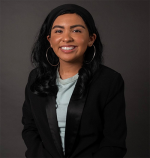
As it does for many college students and recent graduates with disabilities, participation in the Workforce Recruitment Program (WRP) resulted in valuable work experience for Czarina Munoz, who in 2021 spent three months interning with the Federal Deposit Insurance Corporation (FDIC) Human Resource Branch in Dallas, Texas.
While at FDIC, Czarina’s responsibilities included using the agency’s electronic HR information system, assisting in federal recruitment and staffing processes, completing reports, and reviewing files for structure and compliance. But the process of obtaining the internship was just as valuable as the actual job, Czarina says. That’s because she had the opportunity to meet employees from multiple federal agencies and thus gain insight into the diversity of federal-sector jobs.
“You get to talk to real-world professionals who work in specified careers,” she says. “Recruiters give helpful insight on different skills and other career options you might find of interest. Working with the WRP has definitely given me insight on a different career path.” In fact, Czarina now plans to obtain her master’s degree and pursue a long-term career in public administration.
Czarina first applied to the WRP based on guidance from her counselor at the Office of Disability Access at the University of North Texas, where she majored in Nonprofit Leadership Studies, minored in Journalism, and earned a certificate in Latino/a Mexican-American Studies. Although she didn’t receive many WRP inquiries right after her graduation in May 2020, she kept her account up to date and continued to build her skills. Then, in spring 2021 she received an email regarding the FDIC position. She applied, and the rest, as they say, is history.
While completing her internship, Czarina’s managers and co-workers played a big role in helping her feel welcome and benefit from the experience as much as possible. This included providing a few accommodations that allowed her to get the most out of her internship experience.
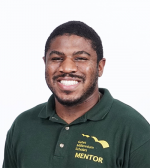
When De’Von Jennings applied for the Workforce Recruitment Program (WRP), he never dreamed it would take him all the way to South Korea, but that’s exactly where the environmental engineer landed for a 14-week internship in 2021.
De’Von was pursuing his PhD in civil and environmental engineering at the University of California Irvine when he learned about the WRP from another student and applied. Once accepted and included in the WRP database, he received a call from a hiring manager with the Army Corps of Engineers offering an internship at Camp Humphreys in Pyeongtaek, on the western coast of South Korea.
The internship allowed De’Von to rotate through a number of hands-on engineering roles, from contamination remediation, to soil sampling, to contract management. “The position taught me a lot about how to work with different agencies and understand government processes such as budgeting and administration,” he said. “I learned how engineering helps us set standards for our infrastructure and expanded my network of contacts in the engineering field.”
Since his internship took place during the height of the COVID-19 pandemic, De’Von did not get to explore Korea as much as he would have liked; however, he still learned a great deal about the culture and got to sample authentic local cuisine. An avid traveler who’s been to 27 countries and five continents, De’Von enjoyed this aspect of his WRP experience immensely.
South Korea is a long way from his native Ohio, where De’Von grew up in the foster care system. “As an African-American male in an unstable housing situation, there were a lot of obstacles I had to overcome,” he says. “But all of those experiences shaped who I am and made me better at navigating the world.”
Indeed, De’Von was able to continue steering his studies and career while halfway across the globe. He defended his dissertation remotely during his time at Fort Humphreys and is currently interviewing for teaching positions at several universities, hoping to secure a position to feed his ongoing passion for research, knowledge and learning.