


Hundreds of thousands of people work in exploitative conditions in the United States. Most never see them or have any idea how many people toil without pay, how many children are employed illegally, how many workers are denied the rights to which they are entitled to under American law. The Wage and Hour Division’s investigators encounter those cases every day.
This work is not theoretical; it is urgent and deeply human.
Last year alone, the Division recovered more than $259 million in back wages for nearly 177,000 workers, with nearly $700,000 going to garment workers alone. We also found 5,272 children working in violation of federal labor laws and corrected their employers’ business practices to ensure better protections in the future.
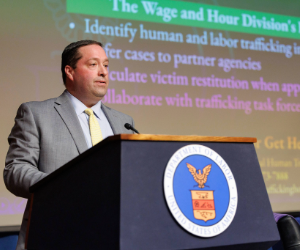
These are not distant headlines. These are real people, working in conditions that are far more common than many realize. As part of our efforts to protect and enhance the welfare of the nation's workforce, we gathered at the Frances Perkins Building in Washington, D.C. on March 19, for a screening of “City of Dreams,” a powerful film that sheds light on human trafficking, labor practices in the garment industry, and the harsh reality of illegal child labor.
Before and after the film, I joined Secretary of Labor Lori Chavez-DeRemer, Deputy Secretary of Labor Keith Sonderling, director Mohit Ramchandani, actor Ari Lopez, stakeholders, government partners, garment industry investigators, and others in discussing the impact of exploitative labor, and how we are combating it.
Here are five things we are still thinking about.
1. The garment industry has a hidden human cost
The film forces us to reckon with a system that often prioritizes speed and profit over the dignity and safety of the people within it. For many in the audience, it reframed fast fashion, the rapid production of low-cost clothing to meet constant demand, in a way that statistics alone never could.
2. We cannot do this work alone
Fighting labor trafficking and exploitation requires coordination. We work with partners like the Department of Justice to investigate cases, hold violators accountable, and connect workers to support. We recently collaborated with Homeland Security Investigations and the Department of Justice in an investigation of an agricultural employer in North Carolina. This multi-agency investigation led to indictments of three Mexican citizens for trafficking farmworkers into forced labor, confiscating their identity documents, and harboring them in the U.S. after their visas expired – all for the defendants’ financial gain.
This is but one case in a litany of others that shapes the important work the Wage and Hour team does every day, and we cannot hope to do it without our federal, state, and local government partners, and without those brave enough to speak up when they see problematic labor conditions.
3. Identifying victims is the first step, but connecting them to support changes lives
Recognizing the signs of trafficking is critical, but it is what happens next that makes a difference in the lives of trafficking victims. The Wage and Hour Division works on the ground to recognize the signs of trafficking and connects individuals to the right services, advocates, and legal protections. While our staff focuses on educating employers and enforcing the law, our partners help formerly trafficked workers find housing, get access to community resources, and obtain legal support.
4. Compliance is more than a checked box
True compliance means investing in transparency, listening to workers, and holding suppliers to standards that are enforced. It means employers focus on lives at stake, not just passing an audit.
5. Art can drive change
Film makes people feel and feeling moves people to act. Events like this one, where art and advocacy meet, help shift public consciousness in ways that traditional awareness campaigns sometimes cannot.
Stay Engaged
Learn to recognize the signs of human and labor trafficking in your community and industry. Ask questions about the supply chains behind the products you buy.
If you suspect labor violations or human trafficking, take action by:
Contacting the Wage and Hour Division at 1-866-487-9243 or visiting our website to find an office in your area.
Calling the National Human Trafficking Hotline at 1-888-373-7888 or text 233733.
Stay connected with the division for upcoming events, training opportunities, and resources.
Andrew B. Rogers is the administrator of the U.S. Department of Labor’s Wage and Hour Division.